
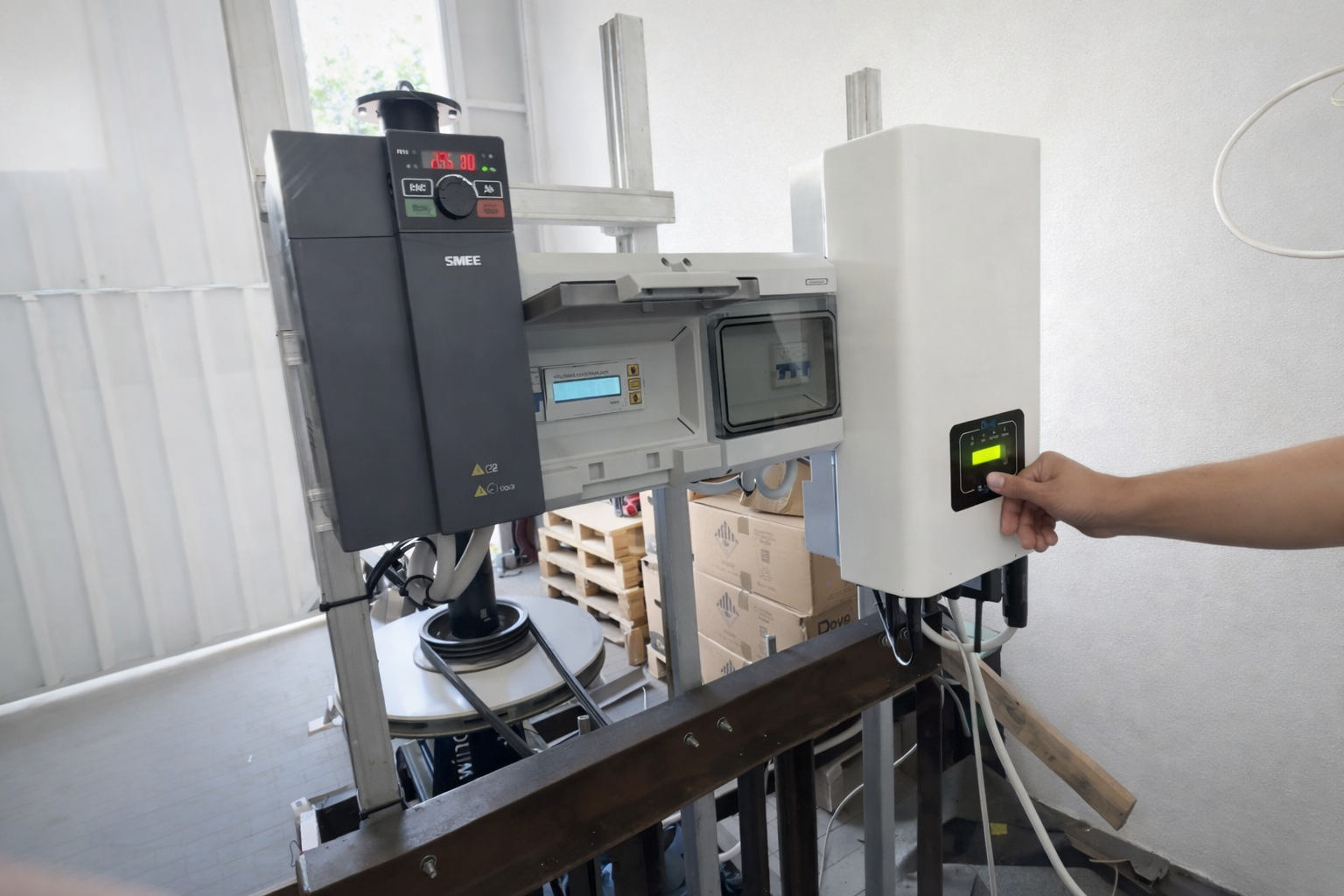
Our wind turbines have undergone comprehensive performance, durability, and safety testing in accordance with the requirements of IEC 61400-2 / EN 61400 standards for small wind turbines.
The scope of conducted tests included:
✅ 1. Safety and Functional Testing
- Verification of protection systems,
- Emergency shutdown system testing,
- Stability assessment under variable wind conditions,
- Brake and dump load performance testing.
✅ 2. Mechanical Strength Testing
- Structural resistance to wind loads,
- Testing of tower, foundation, and mechanical joints,
- Vibration and resonance analysis,
- Fatigue assessment of load-bearing components.
✅ 3. Long-Term Durability Testing
- Long-term operation under real environmental conditions,
- Minimum of 3,000 operating hours,
- Monitoring of component wear,
- Verification of long-term performance stability.
✅ 4. Power Performance Testing
- Measurement of energy output at various wind speeds,
- Development of real power curves,
- Comparison of laboratory and field data.
✅ 5. Acoustic Noise Testing
- Sound level measurements,
- Noise emission assessment for residential areas,
- Aerodynamic optimization validation.
✅ 6. Environmental Resistance Testing
- Operation under varying temperatures,
- Resistance to humidity, rainfall, and salt exposure,
- Corrosion protection testing,
- UV resistance verification.
✅ 7. Grid and System Compatibility Testing
- Integration with PV inverters,
- Compatibility with energy storage systems,
- Off-grid and on-grid operation testing,
- Voltage and frequency stability verification.
Test Results
The conducted tests confirmed:
✔ High structural durability,
✔ Safe and stable operation,
✔ Verified real energy performance,
✔ Resistance to harsh environmental conditions,
✔ Readiness for residential, commercial, and agricultural applications.
As a result, Windxon turbines meet European quality and safety standards and are ready for professional deployment.
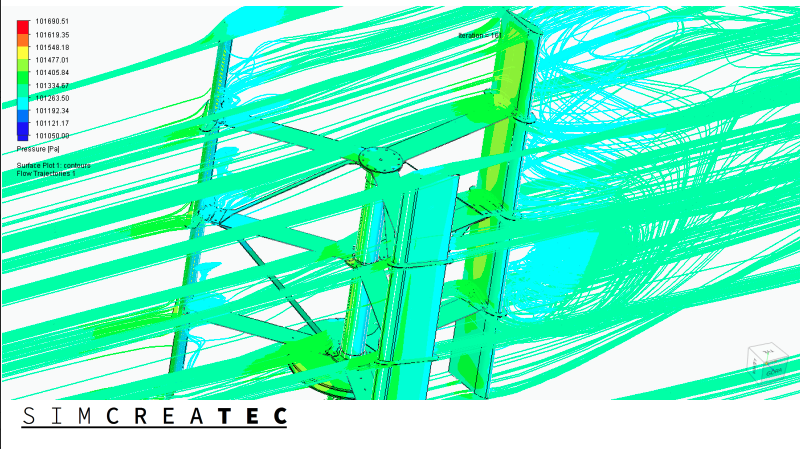
CFD calculation and Strength test
We conduct comprehensive structural analyses using advanced Computational Fluid Dynamics (CFD) techniques that accurately simulate wind flows under extreme conditions. By modeling complex aerodynamic phenomena, our CFD calculations provide detailed insights into how wind interacts with every aspect of the rotor blades. This includes capturing turbulent flows, gust effects, and transient wind loads that occur during severe weather events.
Our specialized CFD simulations are designed to mimic real-world scenarios, allowing us to predict the distribution of aerodynamic loads across the blade surfaces. This information is critical in determining stress concentrations and potential points of failure. By analyzing these stress distributions, we can refine our blade designs to enhance durability and performance, ensuring that every component can withstand even the most challenging environmental conditions.
Moreover, the integration of CFD with our structural analysis workflow enables us to conduct iterative design optimizations. This process ensures that the rotor blades are not only efficient in harnessing wind energy but also robust enough to maintain their structural integrity over the turbine’s operational lifespan. Our approach provides a high level of confidence in the safety and reliability of our wind turbine systems, offering our clients a solution that is both innovative and resilient.
In summary, our state-of-the-art CFD-based strength calculations allow us to simulate extreme wind scenarios, evaluate their impact on rotor blades, and ultimately deliver wind turbines engineered to perform safely and efficiently in any environment.
Lorem ipsum dolor sit amet, consetetur sadipscing elitr, sed diam nonumy eirmod tempor invidunt ut labore et dolore magna aliquyam erat, sed diam voluptua. At vero eos et accusam et justo duo dolores et ea rebum. Stet clita kasd gubergren, no sea takimata sanctus est Lorem ipsum dolor sit amet.
CFD analysis has conclusively
Our comprehensive CFD analysis has conclusively demonstrated that the design exhibits no susceptibility to vibrations during operation. Under extreme wind conditions, our simulations show that all structural components, including the rotor blades, maintain excellent dynamic stability. Even when subjected to transient gusts and fluctuating wind loads, the turbine’s design ensures that vibrational amplitudes remain well within safe operational limits.
These findings provide a strong assurance of the turbine’s long-term reliability and performance. By confirming that our system is not prone to vibration-induced stress or fatigue, we can confidently state that our wind turbine not only maximizes energy capture but also adheres to the highest standards of safety and durability. This rigorous analysis underpins our commitment to engineering innovative, resilient renewable energy solutions for both residential and commercial applications.